B-OCT® Biometry

OCT Biometry

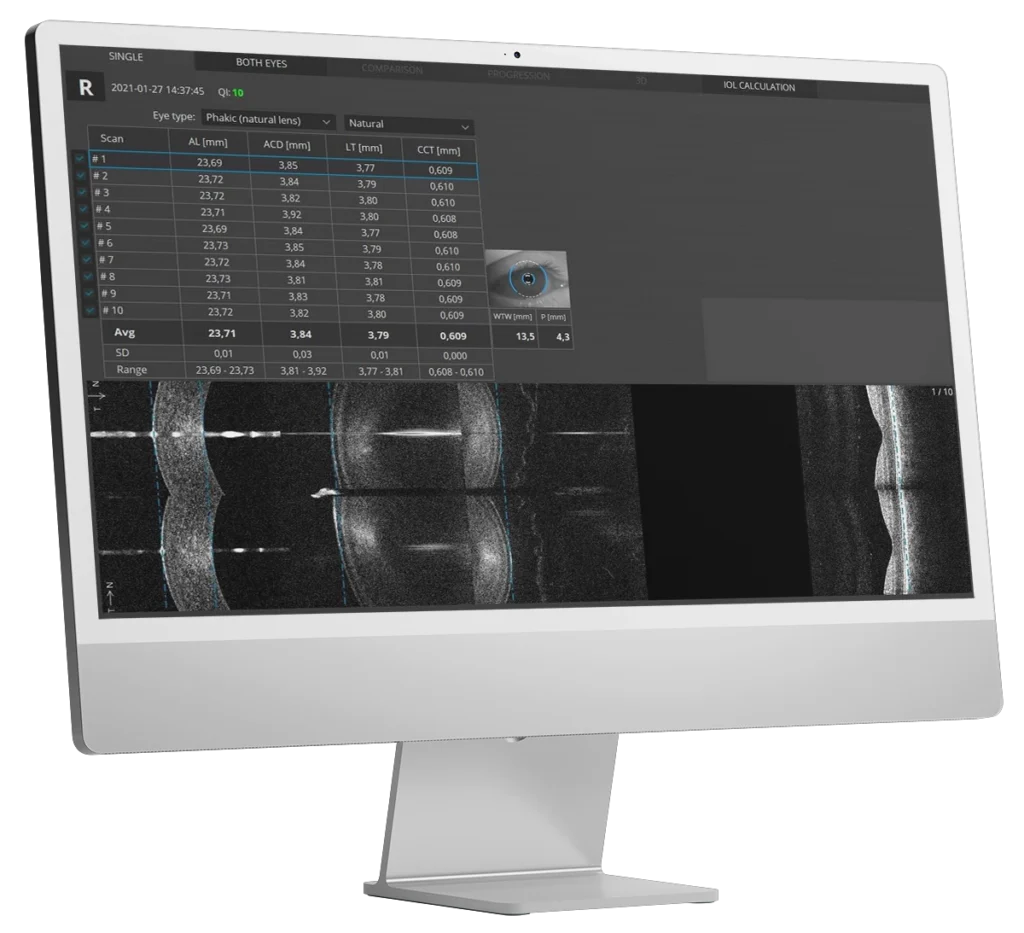
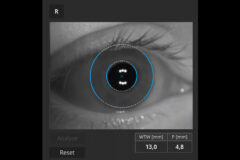
B-OCT® Innovative method of using the posterior OCT device to measure ocular structure along eye axis. OCT Biometry provides a complete set of Biometry parameters: Axial Length (AL), Central Cornea Thickness (CCT), Anterior Chamber Depth (ACD), Lens Thickness (LT), White to White (WTW), Pupil (P).

Overview

B-OCT® enables measurement of ocular axial dimensions using a conventional OCT system. During the examination, the scanning light beam passes through ocular structures located along the visual axis and the following are identified: the anterior and posterior boundary of the cornea, the anterior and posterior boundary of the lens, as well as the posterior boundary of the retina.

To learn more, please read the White Paper: OCT Biometry (B-OCT): A New Method for Measuring Ocular Axial Dimensions ”  Bartosz L. Sikorski, Pawel Suchon 

B-OCT® provides a complete set of Biometry parameters:

  • Axial Length (AL)
  • Cornea thickness (CTT)
  • Anterior chamber depth (ACD)
  • Lens thickness (LT)
  • White to White (WTW)
  • Pupil (P)

IOL Constants

The B-OCT module supports different standards of IOL constants databases. The user can select preference to use IOL manufacturer constant or use optimized constants for the calculation of intraocular lens power. Optimized constants are published by Ulib or recently by IOLCon (Steinbeis Vision Research) on their website https://iolcon.org/. These constants are based on actual surgical data and are provided by IOL Con as a starting point for individual constant optimizations. The module supports the IOL Con database standard so that you can always keep your library up-to-date. The user has choice to use select preferences for IOLcon/Ulib or Manufacturer optimized constants. The current users can update IOL constants directly from iolcon.org or provide own contants.

Verify your measurement visually

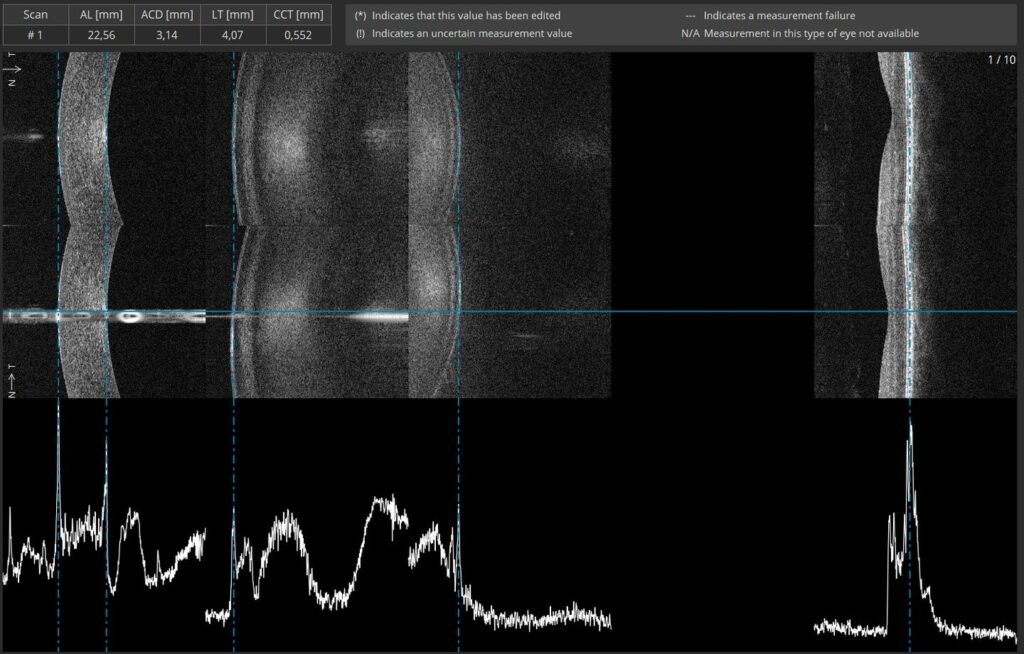
The biometry image provided by the REVO FC presents measurement calipers on all structural boundaries of the eye. This enables easy visual identification of the measured structures or manual correction of the measurement. With a simple cursor shift, it is possible to precisely set boundaries in difficult cases with 5 μm axial resolution. The device eliminates the common uncertainty of how the optical biometer classifies the boundaries in non-typical patients.

  • 3 mm scan enables precise evaluation of the Retina condition,

  • 5 μm resolution gives the highest level of details.

The B-OCT® module is available in two options:

Standard Biometry module:

  • High myopia management
  • Axial distance measurement
  • IOL Calculator
  • IOL lens editor
  • IOLcon.org support

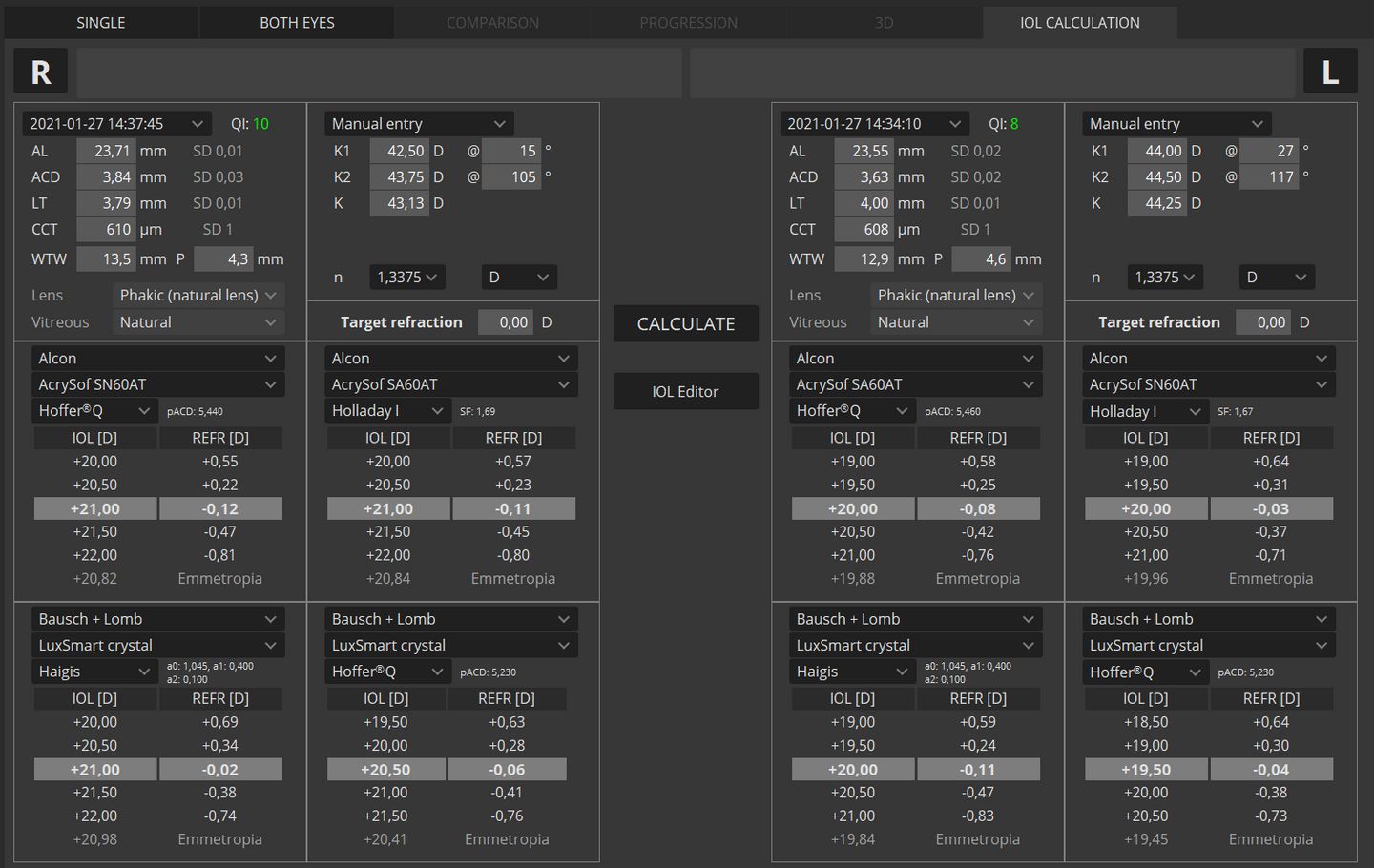
The standard version of the module broadens the functionality of the device with the addition of the IOL Tab which allows the user to calculate the lens power of a selected IOL model (on the basis of the patient’s morphological data).

Basic Biometry module:

  • High myopia management
  • Axial distances measurement
  • No IOL Calculator*
  • Optometrist dedicated module

The basic B-OCT® module provides exceptional comfort for daily use.

*IOL is NOT available in the basic module

IOL Calculator

IOL formulas allow the user to calculate IOL implant parameters. Our systems now support the latest IOL data base standard IOLCon.org so that you can always keep your library up-to-date.

IOL Formulas*:

  • Hoffer® Q,
  • Holladay I,
  • Haigis,
  • Theoretical T,
  • Regression II.

High Myopia

The Myopia Forecast module opens progression of the ocular structure parameters according to trends over population mode. Usage reference based on research from multiple universities along with environmental factors allow the monitoring of changes from childhood to adolescence.

The REVO offers an exclusive selection of reference data based on different studies over different time frames and demographics. Reference data can be selected from the NICER San Diez or Tideman studies.

* – OPTOPOL Technology may extend the number of IOL formulas without prior notice.
Przewijanie do góry